

Welcome To The Alzheimer’s Solution

Introducing BrainDefend®
A Personalized Body-Brain Health and
Renewal Program designed to protect
and optimize your cognitive health as you age.
THE ALZHEIMER'S SOLUTION
Latest News from the Blog
How COVID-19 might increase risk of memory loss and cognitive decline
By Natalie C. Tronson, Associate Professor of Psychology, University of Michigan Edited by Ralph Sanchez Of all frightening ways that the SARS-COV-2 virus affects the body, one of the more insidious is the effect of COVID-19 on the brain. It is now clear that many...

Lose The Belly Fat And Save Your Brain From Shrinking
The role of obesity in late-onset Alzheimer’s disease is linked to insulin resistance, type 2 diabetes, cardiovascular disease, and chronic inflammation pathways. Not surprisingly, the same cardiometabolic disease patterns are correlated to brain and hippocampal volumes (brain shrinkage).

Late-Onset Alzheimer’s Disease—The Hidden Midlife Crisis
Midlife may be a critical juncture in one's life and a time for contemplating what the rest of it will look like. It may be a time of reflection on time well spent or sheer regret for not having done enough of what you really love to do. Midlife may also be a turning...
THE ALZHEIMER'S SOLUTION
Save Your Brain - Save Your Memories - Save Your Life
The Alzheimer’s Solution Revolution Podcast
THE ALZHEIMER'S SOLUTION
Think Ahead for a Better Brain Tomorrow!
MEMBER ACCESS: PFAS—The Little-Known Forever Chemicals are Emerging as Dangerous Neurotoxicants

MEMBER ACCESS: Mercury Depletes Glutathione Peroxidase-Toxic Mechanisms In Alzheimer’s Disease Risk
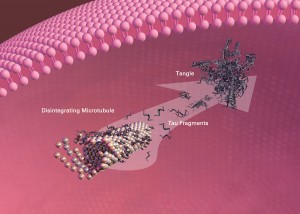
MEMBER ACCESS: Oxidative Stress and the Thromboxane Receptor—A Central Pivot in the Production of Neurofibrillary Tangles

MEMBER ACCESS: TREM2 genetic variants in Alzheimer’s disease

MEMBER ACCESS: Blueberry Polyphenols Protect the Brain from the Degenerative Processes Associated with Brain Aging and Alzheimer’s Disease

MEMBER ACCESS: Brain-Derived Neurotrophic Factor—Growth Factors in Neurogenesis and the Protection Against Alzheimer’s Disease Progression
Join Us & Get MEMBER Access – it’s FREE!


#alzheimersbiomarkers #bloodtests
There has been a great deal of media attention regarding the recent announcement of a "new" FDA approved blood test "that can be used at outpatient memory clinics to diagnose the disease in patients with a range of cognitive impairment."
While the test's accuracy has been validated by a recent trials including a Mayo Clinic study (report linked to here), similar blood tests have been available to physicians for a few years now.
The difference?
The FDA stamp of approval meaning there was sufficient evidence shown in preliminary trials that warranted the usual FDA approval for public use.
However, I have reported here on Alzheimer's blood tests in the last couple of years that utilize the very same FDA approved test biomarkers, tau and beta-amyloid (Aβ42/40 ratio, phospho-Tau217), that other testing laboratories provide.
In November-2020, I posted here that the much anticipated announcement for the first beta-amyloid blood test (Aβ42/40 ratio) for clinical use was finally here.
Subsequently, Quest Diagnostics' direct-to-consumer AD-Detect screening test (Aβ42/40 ratio), first launched in 2023 (no longer available), was relaunched this year with the addition p-tau217 to the Aβ42/40 ratio biomarker.
Similarly, in 2023 (9/2023), I reported on the blood test—PrecivityAD2™—that includes a set of significant tau protein blood biomarkers—phosphorylated and nonphosphorylated forms of the p-tau217 and p-tau181 proteins.
Earlier this year, (4/01), I again posted here on PrecivityAD2™ which is available from C₂N Diagnostics and there expanded test offering that includes both Aβ42/40 ratio and p-tau217 and p-tau181 proteins.
I also include in that post the backstory on the C₂N Diagnostics menu of tests is that the technology that underlies their p-tau217 assessment was developed by researchers at Washington University School of Medicine in St. Louis (WashU).
Both AD-Detect and PrecivityAD2™ are not FDA approved.
And, in that post the "most recent announcement, WashU researchers have developed another tau blood biomarker—MTBR-tau243.", which promises to be the next generation of tau protein biomarkers available for clinical use.
The point here in this overview that the recent FDA blood test approval/announcement is designated to be utilized in symptomatic patients 55 years of age and older.
All good except that news stories that promote the validated Mayo Clinic and FDA approved test fail to include the importance of similar and many other tests that can be leveraged for PREVENTION, including that very same FDA and Mayo Clinic cited test.
The report linked to here ends with a comment about next steps in the Alzheimer's testing research: "to evaluate blood-based testing in more diverse patient populations and people with early Alzheimer's disease who show no cognitive symptoms.
Indeed, as I reinforce repeatedly in my book, there is a significant menu of Alzheimer's and dementia risk assessment options (e.g., genetic profiling, cardiometabolic risk assessments) that provide invaluable insights that can be leveraged for both prevention and in the earliest stage of Alzheimer's disease–the asymptomatic stage (no cognitive impairment).
The most opportune timing in the evaluation of risk for late-onset Alzheimer's disease (LOAD) is midlife or earlier, and before any noticeable cognitive impairment is apparent.
Think Ahead!
BrainDefend®

newsnetwork.mayoclinic.org
Mayo Clinic researchers validate blood test to diagnose Alzheimer's disease in outpatient memory clinics. Learn more.1 CommentsComment on Facebook
#CAIDEapp #dementiarisk #lateonsetalzheimersdisease
I've often stressed in my posts here over many years now that early risk assessments for Alzheimer's disease and vascular dementia is a prudent and vital strategy.
Is 24 years of age too early to begin tracking your risk for Alzheimer's and vascular dementia?
Consider this ... we've know for well over a decade that late-onset Alzheimer's disease (LOAD) has a traceable trajectory of at least 20 to 30 years to more.
Additionally, biomarkers that are linked to an increased risk for LOAD and vascular dementia are well established risk factors.
I first came across and understanding of the linkages for cardiovascular disease (CVD) and LOAD in the late 90s, and at that time wondered why medical professionals and Alzheimer's organizations were not actively alerting and advising the public about that association.
For example, the ApoE4 genetic risk variant is a significant risk factor for CVD AND LOAD, and you can control whether or not it becomes a factor in for CVD or LOAD as you age.
Ditto for all the other risk factors associated with ApoE4 such as type 2 diabetes, cholesterol imbalances, diet and lifestyle patterns, and the chronic inflammation and oxidative stress associated with it all.
A host of very accessible metabolic, biochemical, and genetic risk factors are very accessible and can shed a great deal of light on your risk for CVD, type 2 diabetes and LOAD throughout life.
Plus, the Cardiovascular Risk Factors, Aging, and Incidence of Dementia (CAIDE) score has long been used as risk assessment for CVD, LOAD, and dementia.
10 years ago, it was proclaimed that "The CAIDE Risk Score App is the first evidence-based App to estimate future dementia risk in midlife".
And now, in a study that included the CAIDE risk score in a study "which tracked a nationally representative cohort of adolescents since 1994-1995 ... the CAIDE score and cognitive function in young adulthood and early midlife in the U.S., showed that significant associations with cardiovascular risk factors can be observed well before age 50,”
For a more comprehensive overview of the role of type 2 diabetes and CVD in the risk for LOAD, please read "The Diabetic Brain in Alzheimer's Disease" which you can pick up on Amazon.
Think Ahead!
BrainDefend®
New Research Lays Groundwork for Early Detection of Alzheimer’s Disease
www.publichealth.columbia.edu
Established risk factors and biomarkers were associated with cognitive function as early as 24 years of age.0 CommentsComment on Facebook
#dementiaawareness #EmergencyAssistance
Imagine having to rush one of your parents to an emergency room due to a psychotic or other type of urgent care need. So stressful.
Worse is the possibility that you may be stuck there for hours on end until someone can attend to your parents's care.
Or worse, having to leave them there as it may take days or weeks before there is an appropriate evaluation and followup—a nightmare scenario.
An emergency room visit is likely the last place you want to find yourself with a loved one who has dementia and is in need of immediate assistance.
As the report linked to here indicates, hospitals and their emergency care units are ill-equiped for the quick onboarding of a person with severe cognitive impairment.
As the incidence of Alzheimer's disease and other dementia-related causes continues to escalate here in the U.S. and around the world, families who are not aware of how to anticipate and plan ahead for the care of a family member that progresses from a seemingly harmless forgetfulness into a more severe cognitive impairment and eventual diagnosis of dementia will find themselves in a frantic rush to figure out what to do next.
The latter is particularly true for families who simply do not have the financial resources to seek professional guidance and care that can respond appropriately and expeditiously.
Instead, you may find yourself rushing to an emergency room for help—the last place you may want to find yourself in such a crisis.
Think ahead ... if a family member is experiencing any difficulties in executing their daily activities due to cognitive dysfunction, get to a medical professional ASAP for an evaluation.
Early assessment and interventions can make all the difference in the world, and keep in mind that a proactive approach and a personalized preventive plan may arrest a cognitive decline and prevent dementia.
Don't Wait To Be Diagnosed!
BrainDefend®
As Dementia Rates Increase, Experts Warn Hospital Emergency Rooms Are Underprepared
www.medpagetoday.com
Number of staffed hospital beds has stayed static, even as emergency department visits have grown0 CommentsComment on Facebook
#tauprotein #alzheimerstest #biomarkers
Over the last few years, I've posted here on the development of tau and beta-amyloid protein blood-based biomarkers in the assessment for Alzheimer's disease.
For example, in November-2020, I posted here that the much anticipated announcement for the first beta-amyloid blood test (Aβ42/40 ratio) for clinical use was finally here.
Similarly, blood test reports for plasma tau protein (phospho-Tau217) have shown significant promise for adjunctive assessment options to the Aβ42/40 ratio assessment.
Recent studies funded by the National Institute on Aging have shown that the blood samples of phospho-Tau217 (p-tau181) can serve as a viable biomarker for the early detection for early-onset AD many years before the onset of symptoms.
One such study concluded that "Blood measurements of ptau217 were also about 90% accurate at distinguishing people who later developed symptoms of dementia."
Plus, p-tau217 blood levels were deemed to be good as PET imaging and cerebrospinal testing for the specific development of AD.
And in 2023 (9/2023), I reported on the blood test—PrecivityAD2™—that includes a set of significant tau protein blood biomarkers—phosphorylated and nonphosphorylated forms of the p-tau217 and p-tau181 proteins.
Note that PrecivityAD2™is available to physicians from C₂N Diagnostics.
The backstory on the C₂N Diagnostics menu of tests is that the technology that underlies their p-tau217 assessment was developed by researchers at Washington University School of Medicine in St. Louis (WashU).
Now, and their most recent announcement, WashU researchers have developed another tau blood biomarker—MTBR-tau243.
The WashU report linked to here includes their rationale on the importance of another complimentary tau protein aggregate assessment (MTBR-tau243) that provides invaluable insights into the progression of Alzheimer's disease, and also is specific to Alzheimer's dementia.
The MTBR-tau243 evaluation viability was based on data extracted and validated from two cohorts that included individuals in the:
- presymptomatic stage of Alzheimer's disease (no cognitive impairment),
-through early-stage disease with mild cognitive impairments, and
- individuals with late symptomatic disease when patients exhibit full-blown dementia.
"The researchers’ analysis showed that blood MTBR-tau243 levels reflected the amount of tau tangles in the brain with 92% accuracy", and were independent of beta-amyloid aggregates.
Note well well (not included in the report) that neuroimaging tests such as PET, MRI and SPECT are accepted as valuable adjunctive tools for a biomarker guided approach for early diagnosis and treatment.
More importantly, while the tau and beta-amyloid tests are indeed important in the assessment of Alzheimer's disease stages—early to late stage—the most opportune timing in the evaluation of risk for late-onset Alzheimer's disease (LOAD) is midlife or earlier, and before any noticeable cognitive impairment is noticeable.
In combination with genetic profiling, cardiometabolic risk assessments, evaluations for hormone imbalances and deficiencies, and cognitive performance tests and others, such evaluations can also shed light on person's risk and vulnerability for LOAD as they age.
Don't wait to be diagnosed.
BrainDefend®
medicine.washu.edu
Could help determine which patients are likely to benefit from new Alzheimer’s drugs0 CommentsComment on Facebook
THE ALZHEIMER'S SOLUTION
TestimonialsWhat a tremendous resource! Thank you for putting all of this great research in one place! I am also extremely interested in warding off a family history of Alzheimer’s and Dementia. Medicine can be so very powerful when we are able to identify the biochemical inefficiencies, apply specific dietary and nutritional remedies and compile a protocol to heal not just an individual, but generations. Thank you Ralph!
This is an incredible article! Very powerful information! Thank you so much for putting it together the way that you have. This information needs to get out to the masses. You explained that very well.
Absolutely the BEST article I have read on the insulin/AD connection. As always, your brilliance is very much appreciated!
Thank you so much for this well written article. Looking forward to future updates. Thanks for this well illustrated, researched, and detailed yet succinct article.